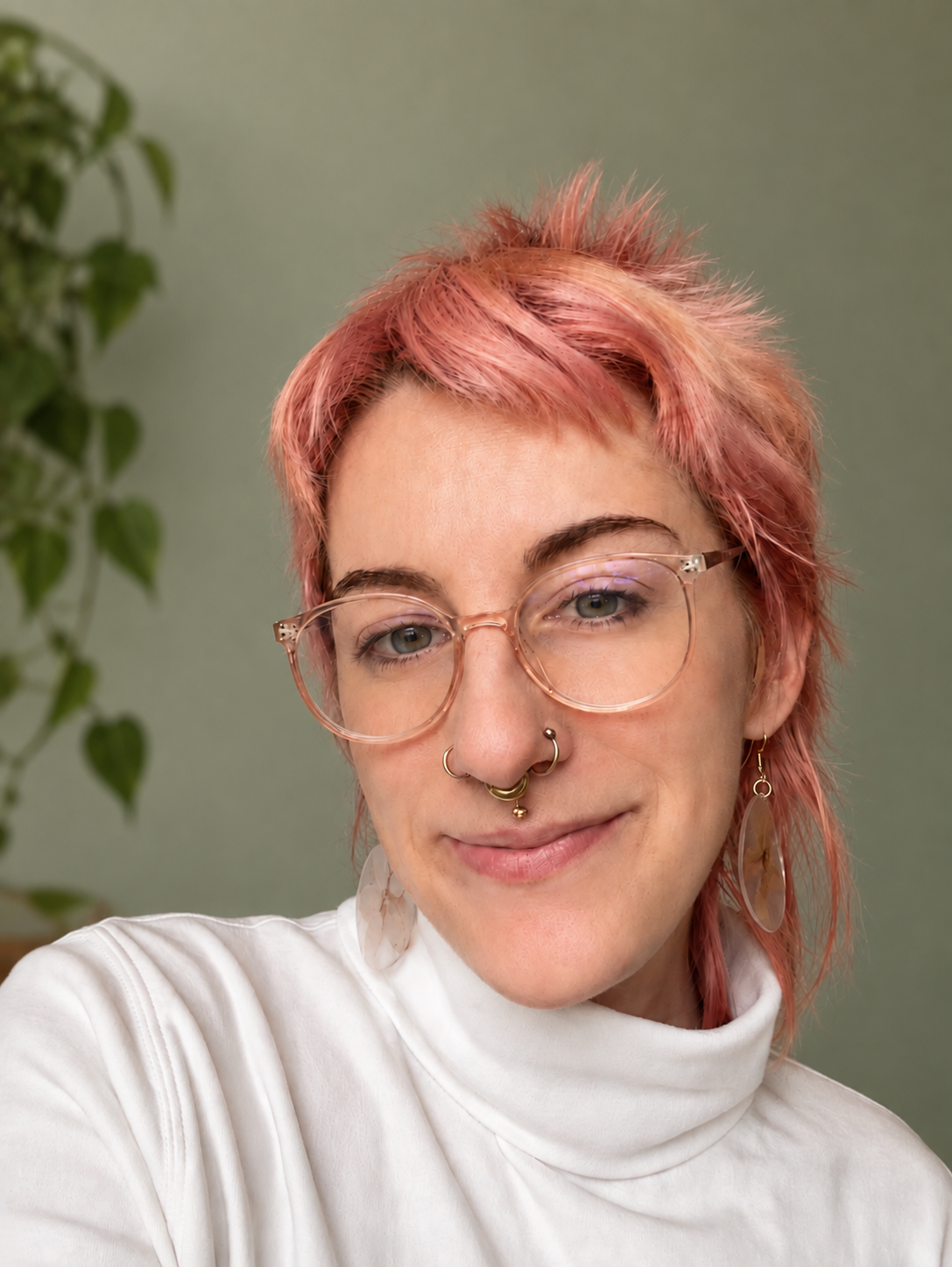
By Libby Farren, MS, TLLP
When I ask clients about their previous experiences in therapy, they often tell me stories that go something like this.
They are struggling with the stress of working two or more jobs, being a parent and caretaker, and trying to fill their own buckets, all while facing a rising cost of living that makes it increasingly impossible to care for themselves and their communities.
They are students and young adults, entering, in the middle of, or leaving high school and college with dreams of who they want to be and the impact they want to have on the world, only to be disillusioned by the higher education system, failing job prospects, and a crumbling social safety net.
They are queer and trans clients who have been stripped of their gender-affirming care and threatened with violations of their confidentiality.
They are Black, brown, and immigrant clients who are relentless targets of systemic racism, xenophobia, police brutality, and disenfranchisement, and who fear for their safety just going to work.
They are clients who feel rejected, invalidated, and marginalized, who are simply struggling to bear the weight of a world not designed for their bodies, their minds, or their betterment.
They come to therapy looking for a space, a place, and a person to recognize and affirm their humanity: a therapist who validates the exhausting weight of living under white supremacist, racist, sexist, capitalist patriarchy. And yet, more often than not, they are told by their therapist that the source of their distress, pain, or suffering is an individual phenomenon, one that requires them to change how they think about, feel about, or approach the problem. No one acknowledges that systemic oppression is truly the most distressing symptom of them all.
Where I learned to see it differently
Throughout my undergraduate and graduate career, I frequently came across this individualistic, reductionistic view of therapy. It measured a person’s mental health only by their individual capacity to regulate their emotions, engage in values-committed action, and go about the process of acceptance and behavioral change.
As an undergraduate, I studied both psychology and women’s, gender, and sexuality studies. I wanted a degree in psychology to develop a deeper understanding of human behavior, thought processes, and relationships. But I also knew that my way of thinking and being in the world (my personal psychology) was heavily informed by my existence as someone raised as a woman, and now living as a queer adult, who has experienced harassment, subordination, and violent misogyny under patriarchy.
As someone who grew up on the east side of Cleveland and went to predominantly Black schools, I also saw how my Black and brown classmates’ mental health and safety were devastated by the mere presence of police, zero-tolerance policies, and underfunded schools that resembled prisons more than educational institutions.
All my life, I have understood my own emotional reactions, biases, and behavior, and tried to understand others whose position in life is different from mine, as shaped by the larger contexts, cultural backgrounds, and communities in which we all interact and exist. With that background, how could I understand mental health and mental health “disorders” as anything but individual expressions of pain, discomfort, and nonacceptance stemming from systemic oppression, institutional injustice, and generational trauma?
The same framing, again
When I started my clinical training in graduate school, I encountered the same reductionist, individualistic, nonaffirming, and culturally neutral (or, if you like, colorblind) view of clients and their mental health struggles.
Autistic folks across the spectrum were characterized as having only social, emotional, and intellectual “deficits,” unless they had fewer support needs, in which case they must have been “higher functioning” or “gifted in a particular area.”
The experiences of transgender, nonbinary, and gender-expansive folks were hardly ever discussed, and when they were, never outside of a binary, dysphoria-centered framework. Any honest discussion of dysphoria has to include the disproportionate rates of violence, hatred, discrimination, and stereotyping that transgender and gender-diverse folks face, because those conditions contribute to, and are very much a source of, that dysphoria.
Again, I encountered the same narrative: if we just help clients learn the right skills, challenge their unhelpful thoughts, and develop better awareness of their own and others’ emotions and response patterns, it will be enough to improve their well-being, self-esteem, and psychological flexibility, regardless of discrimination, prejudice, and social inequity.
What was absent from that discussion, and what is critical for effective therapy, is the understanding that a client’s story and struggles call for more than reframing negative thoughts and scheduling enjoyable activities that bring us in touch with each other and our values. These are wonderful techniques, methods, and metaphors, and they do bring about psychological wellness. But the effort is futile if we do not first recognize the psychological harm of oppressive systems, and how those oppressive conditions show up at the client level as symptoms of larger systems.
What no checklist can capture
There is no diagnosis that could ever appropriately capture the common thread running underneath the distress, hopelessness, and pain in the client experiences I described above. There is no list of symptoms, however long, paired with neat rows of checkboxes, that could adequately reflect the contradictory, intersectional nature of these oppressive systems and how they affect both our individual and our collective well-being.
Western, European schools of psychology often view wellness in very individualistic and reductionist ways, seeing a person’s mental struggles as signs of personal deficit, resistance to change, or laziness. In taking a decolonial approach to therapy, it is crucial that we as therapists recognize how our clients’ existence under these systems affects their mental health. In a broader scope, it is just as crucial that we understand the ways we can foster individual and collective agency in our service to our clients and our communities.
Clinically reviewed by Mel Whalen, PhD, LP — Licensed Psychologist, Michigan #6301015759.
Something here sound familiar?
You don’t have to have it figured out to begin. Tell us a little about what’s going on and we’ll match you with the clinician who fits.
Or text us: (810) 394-8921 — no phone calls needed.
Telehealth across Michigan · In-person options in Washtenaw County
#systemicoppression #decolonialtherapy #antioppressivetherapy #socialjustice #queertherapist #transaffirming #affirmingtherapy #therapy #mentalhealth #annarbor #michigantherapist #forestfernscounseling